
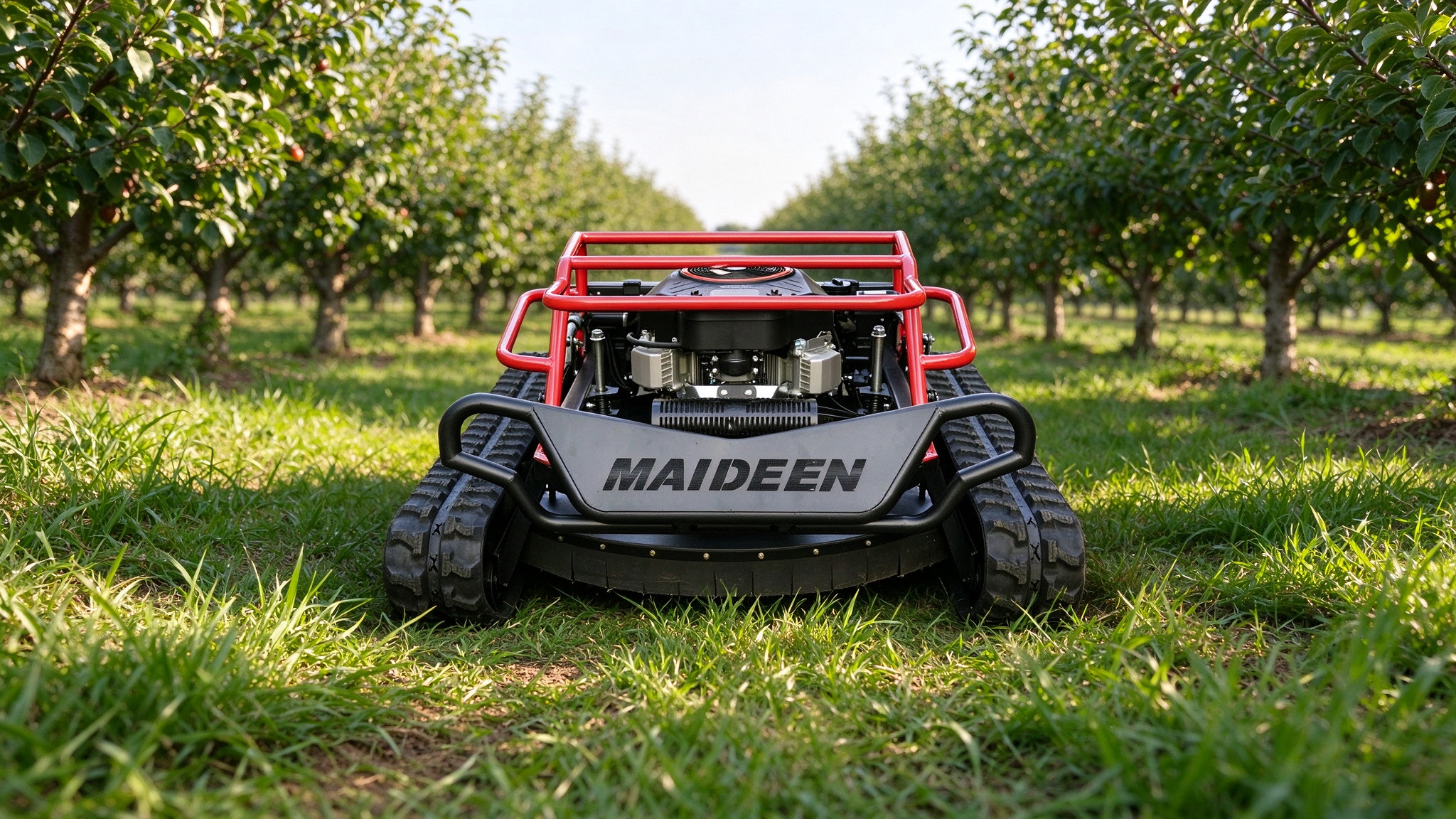
In recent years, ecological restoration, slope protection and orchard understory management projects keep increasing. Steep hills, river banks and tidal land are hard for ordinary machines to reach, which brings growing demand for vegetation clearing. This trend pushes agroforestry equipment to improve terrain adaptability. Manual work is restricted by slope, stones and wet ground, with limited efficiency and potential risks, so mechanization is adopted by many maintenance teams.
Requirements differ greatly among working sites. Areas under solar panels need compact machines with flexible turning. River embankments with soft soil require good anti-slip performance and low ground pressure. Orchard inter-row weeding needs machines that protect tree roots and farm films. Single-function equipment cannot satisfy all conditions, so modular designs with interchangeable attachments are gaining popularity.
Crawler chassis is widely used in these scenarios. Larger contact area reduces sinking risk on soft slopes. With wireless remote control, operators work from safe zones instead of standing on steep ground. Users can switch cutting assemblies for grass trimming, heavy grass shredding and brush removal according to seasonal vegetation changes.
Manufacturers in this industry adjust machine details based on feedback from field projects. Optimizations cover chassis protection, heat dissipation and control systems, to support stable running in dusty and humid outdoor environments. Supporting operation guides and maintenance tutorials also help construction teams use machines properly and extend service life.
Mechanization for vegetation management is not just replacing labor. Site conditions, plant types and budgets all need to be considered during equipment selection. Along with more ecological maintenance projects, specialized agroforestry machines for difficult terrain will keep evolving and find wider application.